Skip to main content Skip to search Skip to main navigation
Knowledge · Organising dog breeding

A head start through DNA information

Good breeding planning rests on a mixture of experience, traditional observation and the use of reliable animal data. DNA information complements the classical assessment – and it can now also resolve a conflict of aims long considered unavoidable: reaching your breeding goals without inbreeding continuing to rise.

Benefits of DNA information

Before direct DNA information became available, the knowledge behind mating planning came exclusively from generations of observation: which lines pass on what, which combinations have proven themselves, where surprises may be expected. DNA information does not replace that skill – it extends it and opens up strategies that were not available before.

Establishing and maintaining traits

Testing and observing

Detailed knowledge of the individual lines was the basis: phenotype, ancestors, results of previous litters. From this, experienced breeders could derive what a mating might produce. The purpose was primarily to improve complex traits, and inbreeding was the method of choice. Carriers of defects that surfaced along the way were selected out.
Targeted DNA tests

Single variants become manageable

Thanks to DNA tests, the most common monogenically inherited traits and disorders can now be addressed, and carriers of recessive variants can be used in matings deliberately.
Inbreeding practised over generations has, however, greatly reduced the genetic diversity of many dog breeds. Containing it without genome-based assessments founders on reality. Inbreeding and genetic diversity →

NEW with Generatio

Genome-based inbreeding management

Our analysis captures the genome of the animal itself and reliably determines the proportions that stem from common ancestors. In mating planning we show what inbreeding level the potential offspring would have. The effect on the population as a whole can be derived directly, and consistent application improves that overall picture.

Components

DNA-supported breeding planning rests on a few building blocks that complement one another. Which of them you use is decided by your breeding goals.

Systematic sample collection

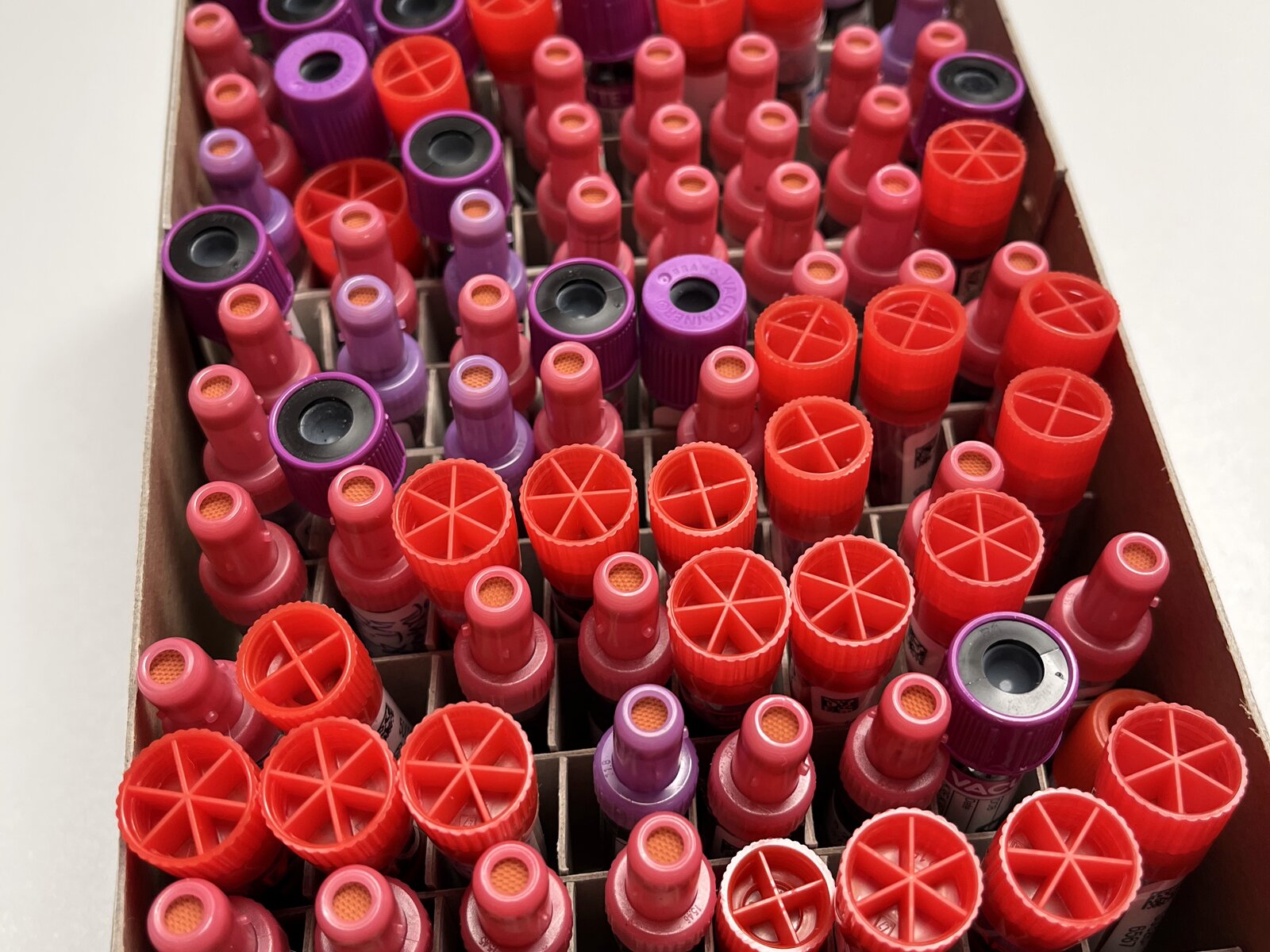
The underlying sample material should be visibly present, reliable and easy to archive. Where that is the case, it remains quickly and easily available for later analyses – including questions that may only arise years afterwards.
Depending on the starting situation and the aim, different sample materials and archiving options are available.

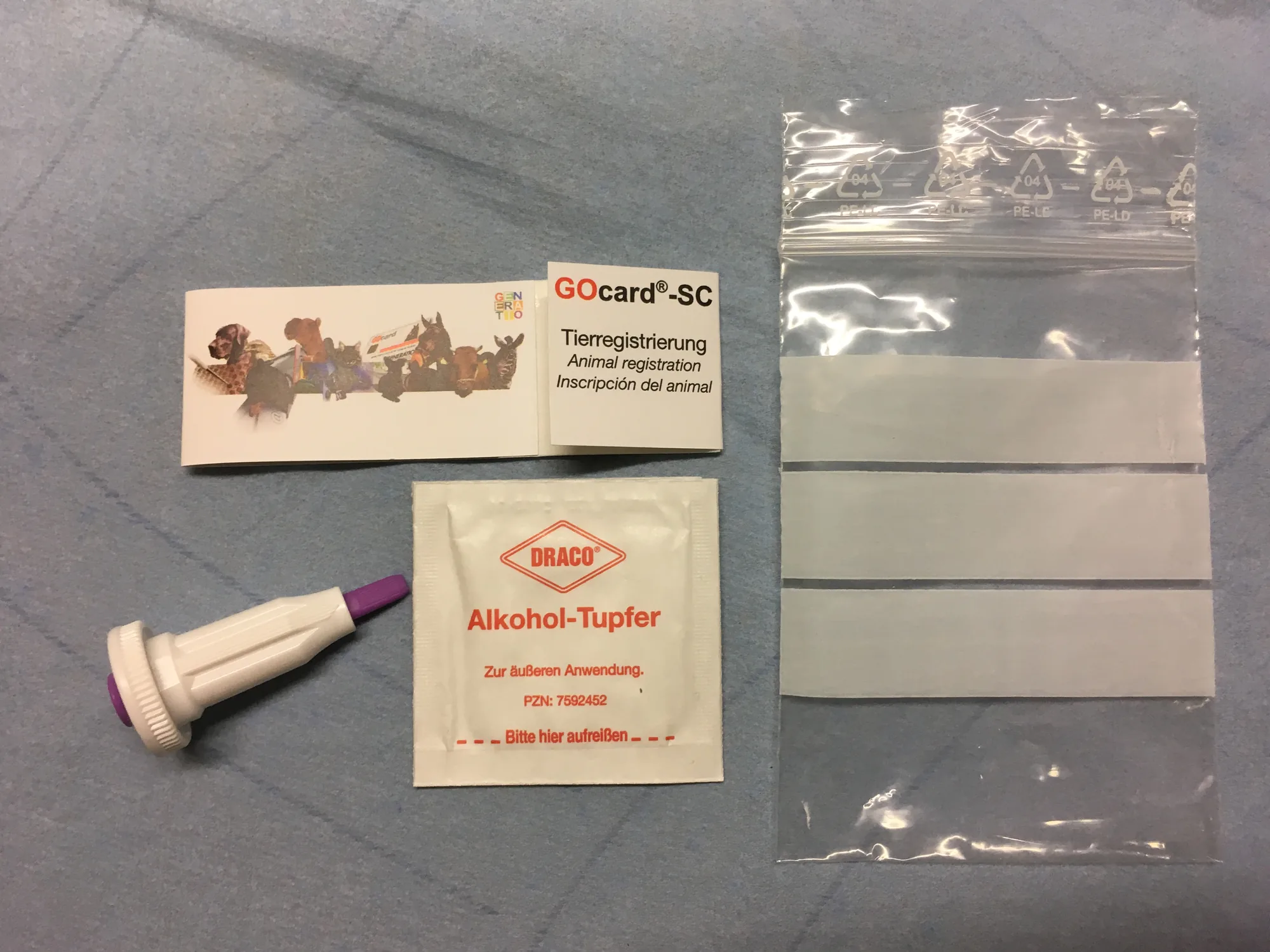
Storage box with tightly packed EDTA blood tubes in the laboratory sample archive.GOcard-SC set for animal registration: opened sample card, lancet, alcohol swab and shipping bag.
EDTA blood or GOcard-SC – both routes lead to a sample that can be archived and used again later.

With swabs it cannot be seen whether they carry enough material. That is too uncertain for storage and later analysis. They are, however, a good choice when the samples are to be analysed right after they arrive.
Sampling and materials →

Basic DNA work

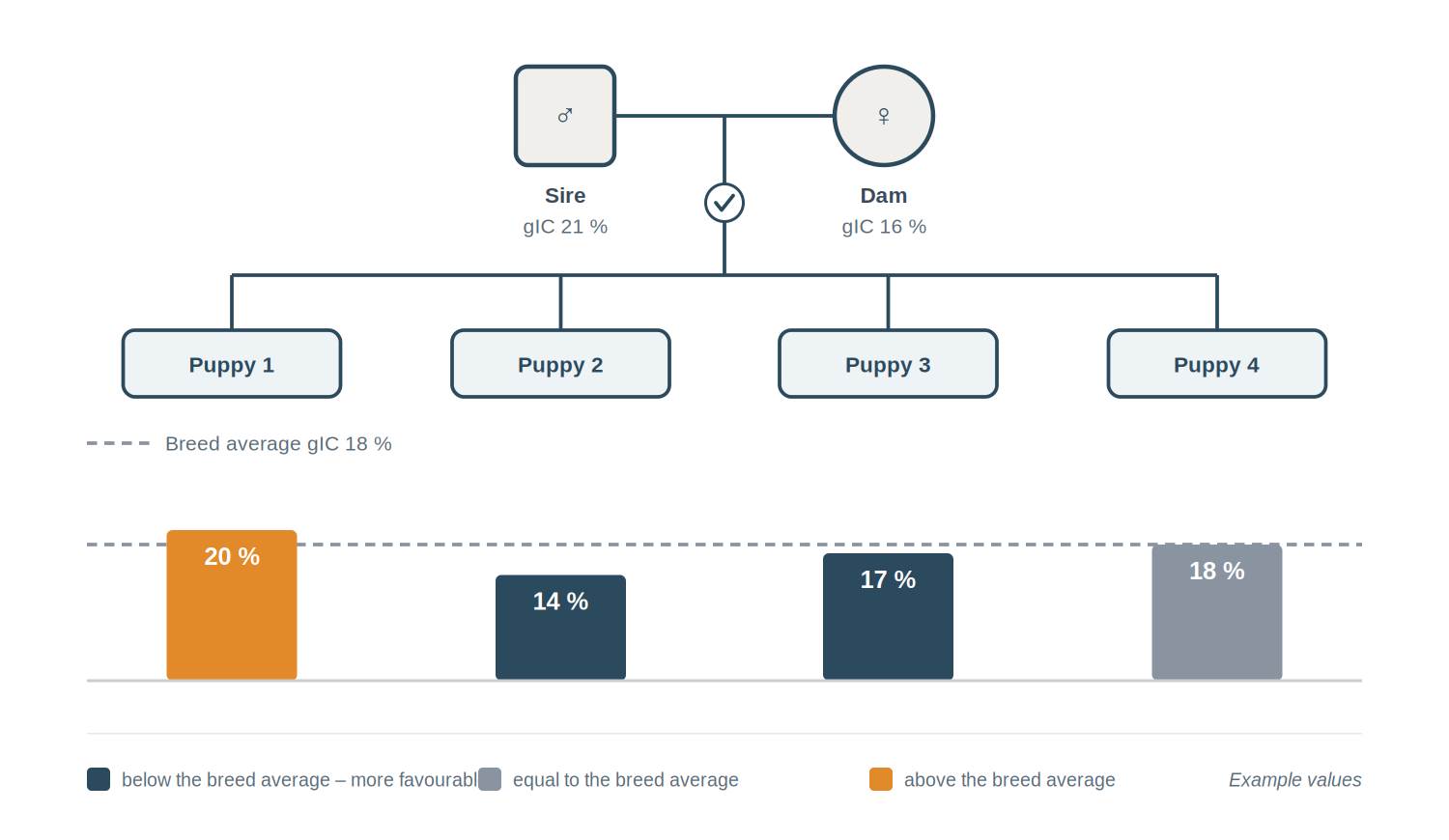
The basis every animal should have is the DNA profile 'identity' including the inbreeding assessment; where the parent animals are registered, DNA parentage verification is added. The benefit reaches beyond your own breeding programme: even a puppy that does not stay in your kennel becomes more valuable, because its origin and genetic background are unambiguously documented.

Parent pair with four puppies; each puppy carries its own genomic inbreeding coefficient between 14 and 20 percent, shown as bars against the breed average of 18 percent.
Breed average gIC 18 %. The gIC calculation shows the actual, individual inbreeding situation of every offspring as it is realised in the genome. Calculated on paper – as breeders had to work until now – all four would be identical. (Example values)
To the shop item →

Extended characterisation of the breeding animals

Where particular DNA tests matter for a breed, we add them. The aim here is to limit testing to the few tests that are actually required – because one of the parent animals was a heterozygous carrier, for example. Offspring of 'clear' parent animals can then receive the result 'clear by parentage', provided parentage has been DNA-verified. Which DNA tests matter in which breed and can be carried out by us is shown by the filter selection.

View all DNA tests →

Mating assessments

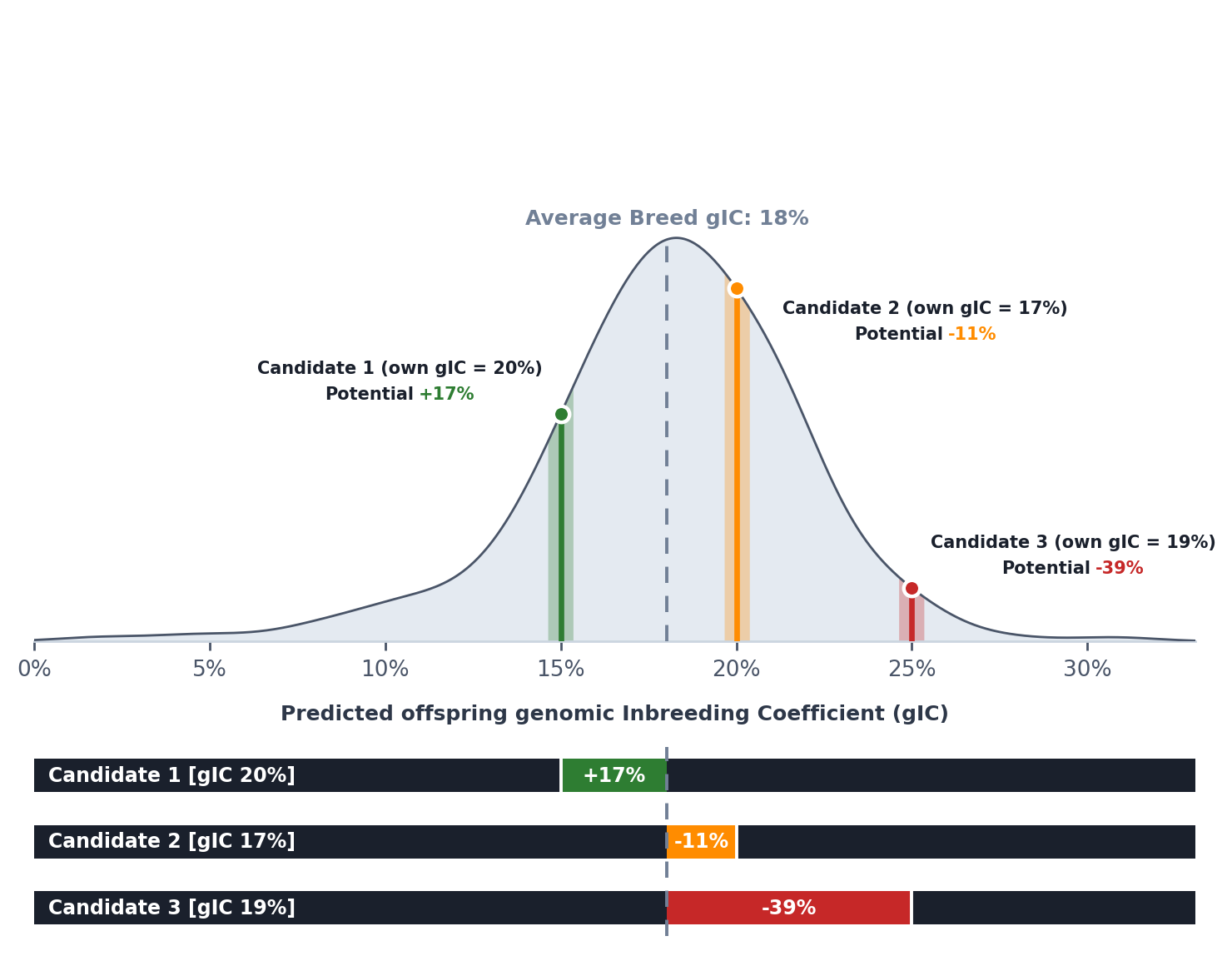
Which prognosis do I get in which combination? Candidate matings are assessed for their effect before the decision is made. Which variants come together, and what is the prognosis for the inbreeding level of the offspring. Not on the basis of uncertain calculations, but on scientifically established DNA information.

Distribution curve of the breed's gIC (mean 18 %) with three mating candidates; below, potential bars per candidate (+17 %, −11 %, −39 %) as deviation from the breed average.
Candidates side by side: expected offspring gIC and the potential of each mating relative to the breed average.

Getting started and going further

Getting started means carefully mapping the existing breeding stock. We are happy to advise you on the details. From then on, the ongoing work is limited to recording the puppies and any breeding animals bought in.

One-off

Getting started

  1. Open an ATC account. The Animal Trust Center is the platform through which orders, samples and findings are handled.
  2. Record the breeding stock. The existing breeding animals are sampled and typed once – the basis for all later analyses and mating assessments.
  3. An online animal file for every animal. Each animal gets a file in which all information is stored permanently and securely. Nothing can be lost, and everything can be retrieved at any time. When an animal changes owner, its file including all findings can be transferred.
Ongoing

Going further

From here on the focus is on the samples of the puppies and of breeding animals coming in from outside. DNA typing follows as required.

Archive module

The sample is stored securely and stays ready to be activated. The appropriate analysis can then be commissioned at any time.

Analysis module

The sample is analysed to the extent you choose: from the DNA profile with inbreeding assessment through to selected tests for inherited disorders and traits.

Breeding organisation or ATC community

Exchange with other breeders – about lines, about experience, about what has proven itself – is irreplaceable, and it works best when it is backed by a shared pool of animal data.
There are two routes to that exchange.

Traditional

Breeding organisations

Breeding organisations keep the historical studbook of a breed – grown over generations, it gives every member insight into the assessments of the approved breeding animals. Beyond that they support their members on many questions of breeding and organise the conformation assessment of the breeding animals. Many run online platforms of their own.

Generatio is a partner of major breed clubs and integrates its work directly into their studbook management: our programmes secure the logistics and guarantee the correctness of the recorded parentages.

DNA programmes in the ATC →
Open

In the 'community'

Not every breeder belongs to a breeding organisation – the wish to use modern DNA information and to work together with others exists all the same. For them we have set up the open DNA programmes of the ATC: the same systematic approach, the same analyses and the same effective networking.

Those who take part contribute their animals to a shared body of data and can assess matings beyond their own stock. Whether a private network of your own or open to everyone – the ATC is the platform.

View the open DNA programmes →