
Von Willebrand Disease Type 3 (VWD3 Dog)
Von Willebrand disease type III (VWD3) is a blood coagulation disorder. The von Willebrand factor plays an important role in blood coagulation. If the disease occurs, this factor is deficient or defective, causing affected animals to show symptoms such as intense and prolonged bleedingafter injuries (for example also after surgery).
The disease (type 3) occurs in the Shetland Sheepdog (Sheltie). The inheritance is autosomal recessive.
Symptoms
- Intense and prolonged bleeding after injuries (for example also after surgery)
- Poor wound healing
- Life-threatening bleeding with large wounds
General Information
- The von Willebrand factor (VWF) plays an important role in blood coagulation.
- Too low a concentration of VWF, or defects of it, lead to an increased tendency to bleed even with small injuries.
- Larger wounds with high blood loss can be life-threatening.
- There are three different types of von Willebrand disease in different dog breeds.
- VWD3 is the most severe form of the disease → hardly any VWF in the blood plasma.
Breeds affected
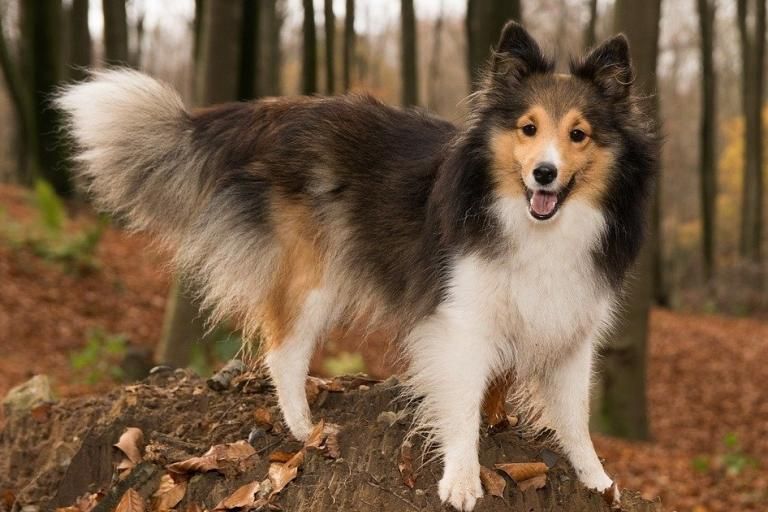
Shetland Sheepdog (Sheltie)
Test Information
This mutation test detects the causative deletion in exon 7 of the VWF gene.
Genotype and Lab Report
Inheritance: autosomal recessive
→ The disease only occurs if both alleles of the gene are affected by the mutation (vwd3/vwd3). Dogs that have only one allele with the causative mutation (N/vwd3) are clinically healthy carriers.
Genotypes:
N/N = genetically normal
The dog has no predisposition for VWD3 and therefore cannot pass it on to its offspring.
N/vwd3 = a carrier
The dog is a clinically healthy carrier. The variation is passed on 50% to the offspring, which are then also carriers.
vwd3/vwd3 = affected
The variation is passed on 100% to the offspring. The offspring are carriers or affected.
Recommendations
- Carrier animals can be bred to normal animals (N/vwd3 x N/N). Before breeding with the offspring, it should be tested whether they are normal or carriers.
- Mating two carrier animals (N/vwd3 x N/vwd3) should be avoided because there is a 25% chance that the offspring will be affected.
- Affected animals (vwd3/vwd3) should be excluded from breeding.
Literature
Nichols, T.C., Hough, C., Agersø, H., Ezban, M., Lillicrap, D.: Canine models of inherited bleeding disorders in the development of coagulation assays, novel protein replacement and gene therapies.J Thromb Haemost 14:894-905, 2016. Pubmed reference: 26924758. DOI: 10.1111/jth.13301.
Further information is available at: Online Mendelian Inheritance in Animals.