
Neuronal Ceroid Lipofuscinosis 10 (NCL10 Dog)
Neuronal ceroid lipofuscinosis 10 (NCL10) is a metabolic, neurodegenerative disease caused by a change of a single base pair in exon 5 of the CTSD gene. Ceroid lipofuscin, a waste product of the cell metabolism, is stored in the cells and not broken down further; it accumulates in the nerve cells. Affected animals therefore show symptoms such as balance disorders and behavioural changes.
The disease occurs in the American Bulldog. The inheritance is autosomal recessive.
In contrast to many other NCLs, American Bulldogs with NCL10 show few signs of severe brain dysfunction or blindness.
Symptoms
- Hypermetria
- Balance disorders
- Hunched posture
- Behavioural changes
In contrast to many other NCLs, American Bulldogs with NCL10 show few signs of severe brain dysfunction or blindness (Evans et al, 2005).
General Information
- Neuronal ceroid lipofuscinosis 10 (NCL10) is a metabolic, neurodegenerative disease.
- Ceroid lipofuscin, a waste product of the cell metabolism, is stored in the cells and not broken down further.
- This leads to deposits of ceroid lipofuscin in the brain and other nerve cells.
- The function of the nerve cells is thereby damaged.
- The first symptoms appear at the age of 2 years and deteriorate continuously.
- NCL10 cannot be treated; affected animals with more severe symptoms often only reach an age of 7 years or are euthanised.
Breeds affected
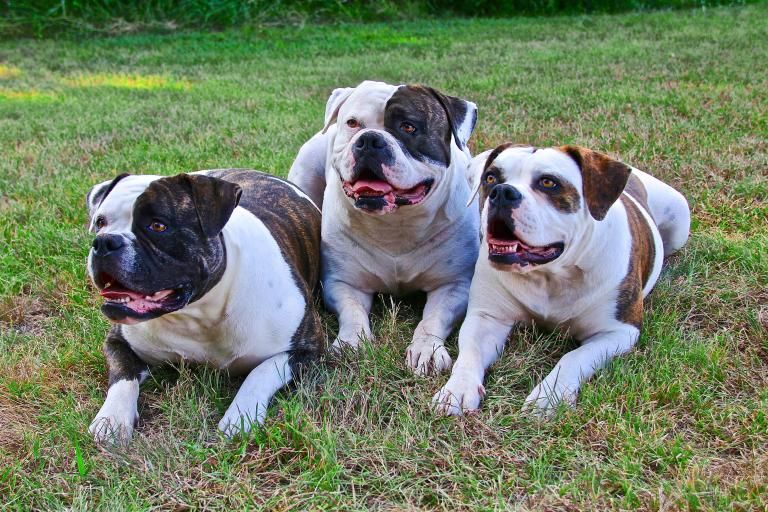
American Bulldog
Test Information
This mutation test detects a change of a single base pair (c.597G>A) in exon 5 of the CTSD gene.
Genotype and Lab Report
Inheritance: autosomal recessive
→ The disease only occurs if both alleles of the gene are affected by the mutation (ncl10/ncl10). Dogs that have only one allele with the causative mutation (N/ncl10) are clinically healthy carriers.
Genotypes:
N/N = genetically normal
The dog has no predisposition for NCL 10 and therefore cannot pass it on to its offspring.
N/ncl10 = a carrier
The dog is a clinically healthy carrier. The variation is passed on 50% to the offspring, which are also carriers.
ncl10/ncl10 = affected
The variation is passed on 100% to the offspring.
Recommendations
- Carrier animals can be bred to normal animals (N/ncl10 x N/N). Before breeding with the offspring, it should be tested whether they are normal or carriers.
- Mating two carrier animals (N/ncl10 x N/ncl10) should be avoided because there is a 25% chance that the offspring will be affected.
- Affected animals (ncl10/ncl10) should be excluded from breeding if they reach breeding age.
Literature
Awano, T., Katz, ML., O'Brien, DP., Taylor, JF., Evans, J., Khan, S., Sohar, I., Lobel, P., Johnson, GS.: A mutation in the cathepsin D gene (CTSD) in American Bulldogs with neuronal ceroid lipofuscinosis. Mol Genet Metab 87:341-8, 2006. Pubmed reference: 16386934. Doi: 10.1016/j.ymgme.2005.11.005.
Evans, J., Katz, ML., Levesque, D., Shelton, GD., de Lahunta, A., O'Brien, D.: A variant form of neuronal ceroid lipofuscinosis in American bulldogs.J Vet Intern Med 19:44-51, 2005. Pubmed reference: 15715047.
Further information is available at Online Mendelian Inheritance in Animals.