
Junctional Epidermolysis Bullosa 1 (JEB-1 Horse)
Junctional Epidermolysis Bullosa (JEB-1) is a skin disease in which missing connections between the individual skin layers lead to skin lesions and blistering.
Symptoms
- Large-area wounds
- Blistering
- Detachment of the hoof
General Information
- Missing cell-to-cell connections lead to detachment of the skin, especially on the legs and in the muzzle region.
- Symptoms appear shortly after or during birth.
- Wounds can become inflamed and lead to death.
- Because of the poor quality of life, affected foals are usually euthanized.
- Very similar symptoms are also caused in American Saddlebred horses by a mutation in the LAMA3 gene.
Breeds affected
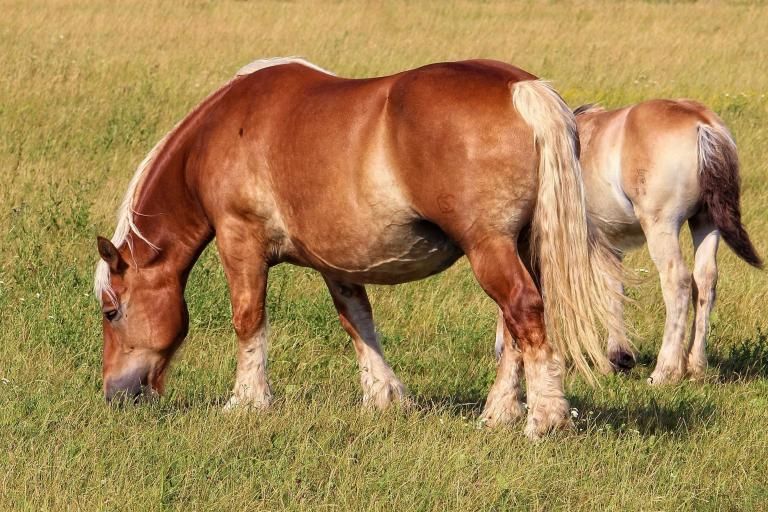
Belgian Draft
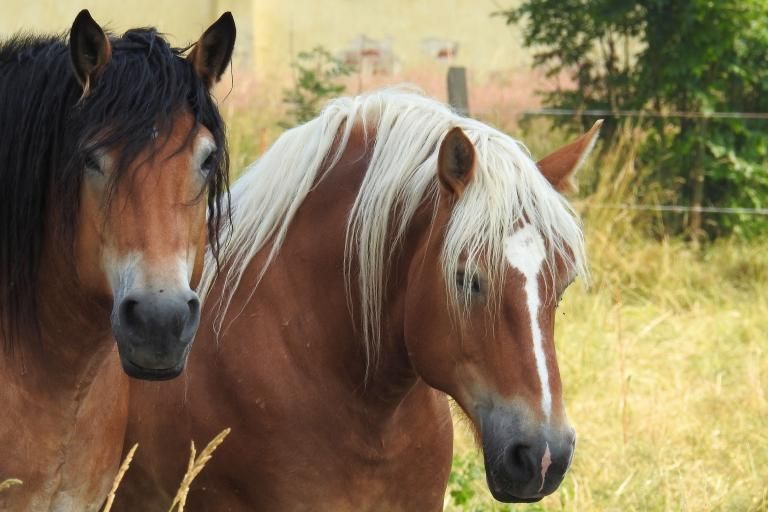
French Draft and Italian Draft
Test Information
This test detects the insertion of a single basepair in the LAMC2 gene.
Genotype and Lab Report
Mode of inheritance: autosomal recessive
→ The disease only occurs if both copies of the gene (jeb1/jeb1) are affected by the mutation. Horses that have only one copy of the causative mutation (N/jeb1) are clinically healthy carriers.
Genotype
N/N = genetically normal
The horse has no copies of the genetic variant causative for JEB-1 and therefore cannot pass it on to its offspring.
N/jeb1 = a carrier
The horse is clinically healthy. The causative mutation will be passed on to its offspring with a probability of 50%.
jeb1/jeb1 = affected
If the horse lives long enough to reproduce, the causative mutation will be passed on to its offspring with a probability of 100%.
Recommendations
- Carriers can be mated with genetically normal animals (N/jeb1 x N/N). Before the offspring are used for breeding, they should be tested to determine whether they are genetically normal or carriers.
- The mating of two carriers (N/jeb1 x N/jeb1) should be avoided, since there is a probability of 25% that the offspring will be affected.
- Affected animals (jeb1/jeb1) should be excluded from breeding.
Literature
Cappelli, K., Brachelente, C., Passamonti, F., Flati, A., Silvestrelli, M., Capomaccio, S.: First report of junctional epidermolysis bullosa (JEB) in the Italian draft horse.BMC Vet Res 11:55, 2015. Pubmed reference: 25889423. DOI: 10.1186/s12917-015-0374-0.
Milenkovic, D., Chaffaux, S., Taourit, S., Guerin, G.: A mutation in the LAMC2 gene causes the Herlitz junctional epidermolysis bullosa (H-JEB) in two French draft horse breedsGenetics Selection Evolution 35:249-56, 2003. Pubmed reference: 12633536. DOI: 10.1051/gse:2003007
Spirito, F., Charlesworth, A., Linder, K., Ortonne, J. P., Baird, J., & Meneguzzi, G. (2002). Animal models for skin blistering conditions: absence of laminin 5 causes hereditary junctional mechanobullous disease in the Belgian horse. Journal of Investigative Dermatology, 119(3), 684-691. DOI:10.1046/j.1523-1747.2002.01852.x
Further information is available on the website: Online Mendelian Inheritance in Animals.